
The 2025 Philippine Real Estate Primer
(from the May 2025 issue of our monthly newsletter, Properties Connoisseur)
This title is not an original thought; I would like to cite that it was expression by my former boss, a well-known tycoon, himself having been the subject of praise and ridicule in his lifetime. The phrase is as direct as it can get – no figures of speech, no flowery words, and yet, many businessmen still forget this street-wise adage.

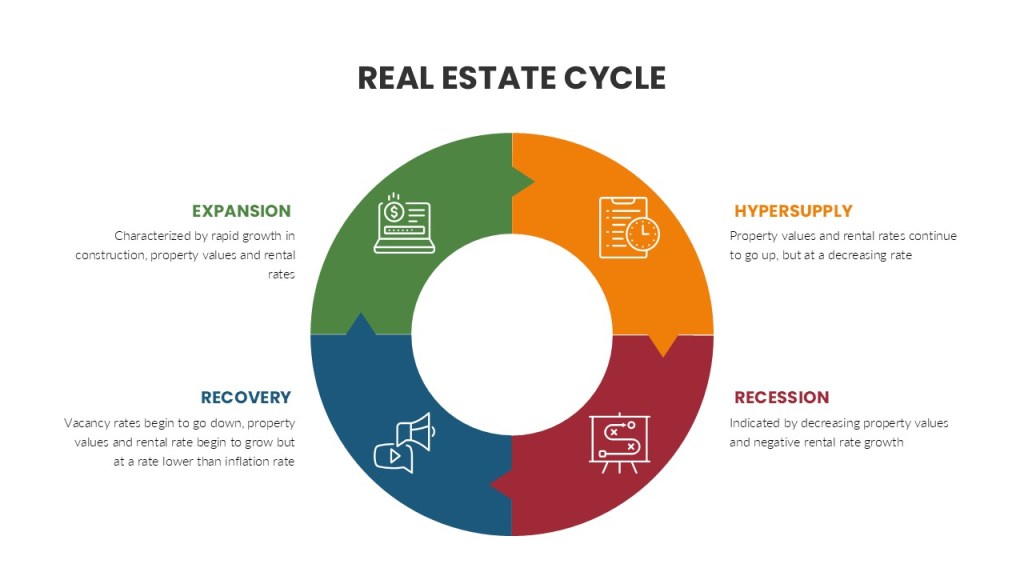
Like any industry, the real estate sector works in cycles, typically over a period of 5 – 7 years. Recent articles from Colliers Philippines and Leechiu Property Consultants have clearly established that the industry is between the stages of Hyper Supply and Recession. Needless to say, there is need to tread this situation with caution, not merely for investors, but more importantly for developers, as there is need to weigh between possible short-term gains and the potential long-term repercussions.
Will Lowering Prices Lead To More Sales?
This is perhaps the first question, the simplest thought based on the principles of basic economics – the lower the price, the larger the quantity. And though this may seem logical, innately, there are hindrances already to implementing such action:
- Increasing construction costs – Though inflation has tempered down, one has to understand that developing properties takes years; high rise buildings now take about 4-5 years to build. As such, lowering prices will be counter-productive and illogical, when facing the near certainty of higher prices of materials and labor.
- Margin protection – For publicly-listed developers, this is a serious concern: lowering prices would affect profit levels, which in turn, will affect their annual reports and financial statements. This would affect viability should they need assistance from financial institutions, and at the same time, weaken investor confidence.
- Public backlash – Here is where reality deviates from theory – decreasing prices does not necessarily mean there will be more buyers. On the contrary, public perception might view the move negatively, raising suspicion on the quality of the product and dampening the reputation of the developer. After all, not only is real estate high ticket, it is also aspirational.
Lessons From The Past
This is not the first real estate crisis in the Philippines; the prolonged expansion of the industry over a period of 15 years (2004-2019) has placed lessons of the past in the back alley of memory. Perhaps it is again timely to cite examples, both good and bad:
- Fil-Estate Group – In the late 80s to the mid-90s, Fil-Estate was an aggressively expanding conglomerate, starting out as a marketing company then eventually venturing into real estate development themselves, with multiple residential and leisure projects. When the Asian Financial Crisis struck in 1997, the company was severely affected, eventually finding difficulty to meet its commitments and complete its projects. It never recovered its footing, eventually selling its assets and legal entity to Megaworld in 2011.
- Uniwide Warehouse Sales Club – Before the emergence of Puregold, Uniwide was the preferred consumer retail chain of the 80s and 90s. From a textile and fabric bargain center, it grew to have its own department stores and grocery chains. After its IPO in 1996, prospects were so forthcoming that it started to venture into building its own malls. Unfortunately, just like the previous example, it also encountered great difficulty during the Asian Financial Crisis with faltering gross sales and reduced rental revenues. In 2017, a lower court declared the company insolvent and issued an order to liquidate assets.
Not all examples are gruesome though:
- SMDC – At the advent of the US Sub-Prime Mortgage Crisis and the eventual fall of several financial institutions, many Philippine companies chose to take prudent steps and cash conservation measures, with the nightmare of the Asian Financial Crisis not too far behind. However, one conglomerate, perhaps with greater audacity than reasoning, saw this as an opportunity to enter a highly competitive industry, at a time when established names were waiting out the storm. Lo and behold, their aggressive campaign, simultaneous launches, and grandiose introduction struck gold, with the market captivated by their flamboyance at a time when promotions and market activities were stagnant; and thus, SMDC came to prominence.
What To Expect
In the near future, despite pronouncements otherwise, one can expect relatively little movement in the industry. New launches will be few, and most probably just come in replacement of sold inventories. There will be cases however, wherein a few companies might gradually but consistently gain prominence, by virtue of either financial strength, reliability or market dominance. As they say, hard times distinguish contenders from pretenders, and indeed, the distinction will become more evident as bearish outlook will stifle expansion based on credit. Still, those who would dare to break from structure and aspire to capture greater market share might find themselves surprisingly successful; as it is said by pioneers and innovators, fortune favors the bold, and at no point is courage in shorter supply than times of fear and uncertainty.
To read more about current news and updates, kindly check out Properties Connoisseur, our monthly newsletter at the News and Updates section